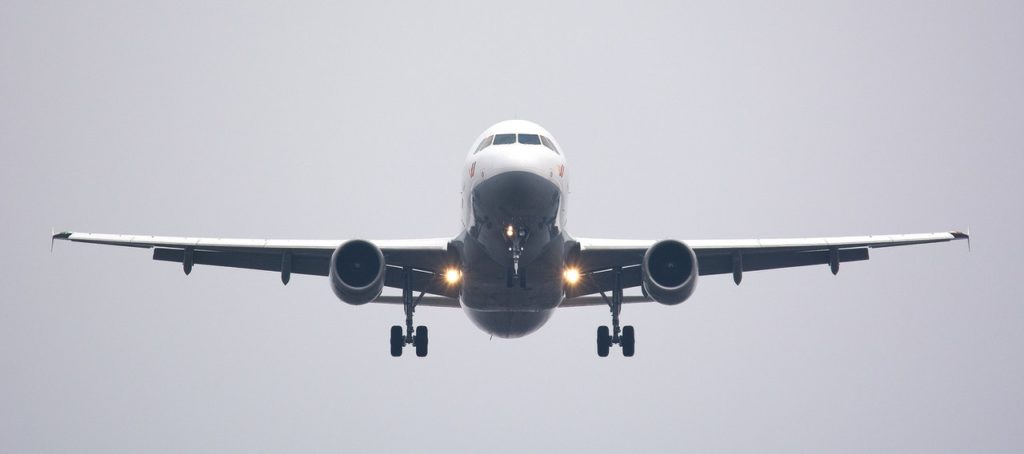
At Gatwick, we have a dedicated team called the Airspace Office whose focus is to continually monitor aircraft operations to ensure compliance with the noise abatement requirements applicable to the airport. The team also oversees the implementation of the airport’s Noise Action plan and undertakes proactive engagement with airlines to drive continuous improvement.
You can read the action plan here and we’ve identified some of our key programs for arriving aircraft below:
Distributing arriving aircraft
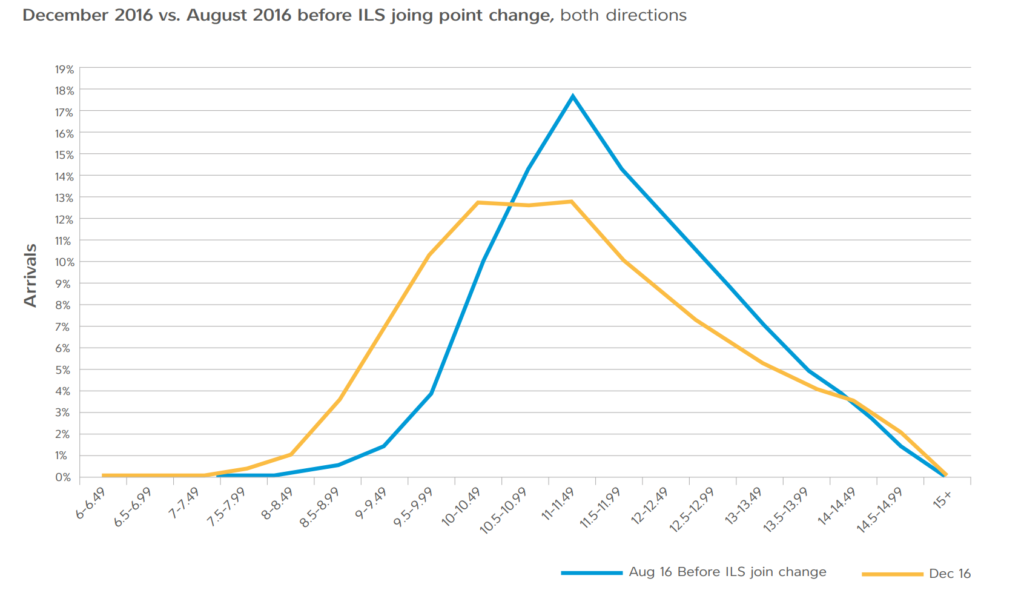
A key recommendation of the Independent Arrivals Review was to make a change to how aircraft arrive at the airport. With the change seeking to increase the spread of arriving aircraft to reduce the peak impact in heavily overflown areas.
The change was implemented as part of a trial in August 2016 to test the procedure and determine if it would meet the overall aim. And, in late 2017 the Noise Management Board voted to adopt the procedure permanently as it had delivered the expected results.
It is worth nothing that the analysis considered long-term trends and day-to-day traffic levels can vary, this is especially true in the busy summer months.
In 2018 the Noise Management Board agreed to investigate additional options to continue to improve the management of arriving aircraft. Their findings likely to be taken-up within the larger re-design of the UK’s airspace, within the UK Government’s Future Airspace Strategy – Southern Implementation (FASI-South).
Continuous Descent Operations
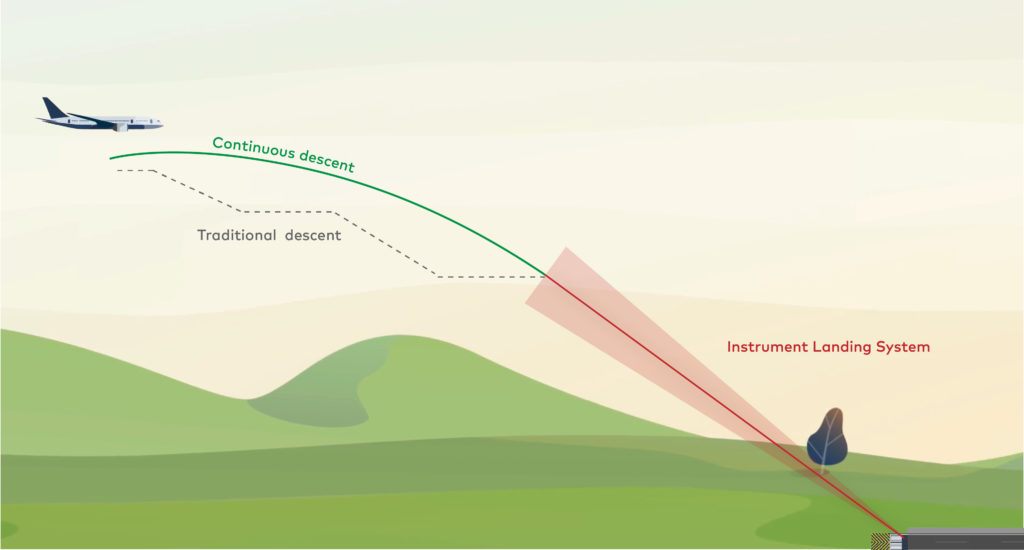
Gatwick Airport requests pilots perform a Continuous Descent Approach (CDA) which seeks to minimise the use of the throttles on approach with the pilots working closely with Air Traffic Control (ATC) to ensure the aircraft can perform a steady glide down to landing. This not only reduces the need for engine power, but it also keeps the aircraft much higher, as shown in the diagram.
In addition to maintaining a CDA, Gatwick Airport also requests pilots utilise low power, low drag procedures (LPLD).
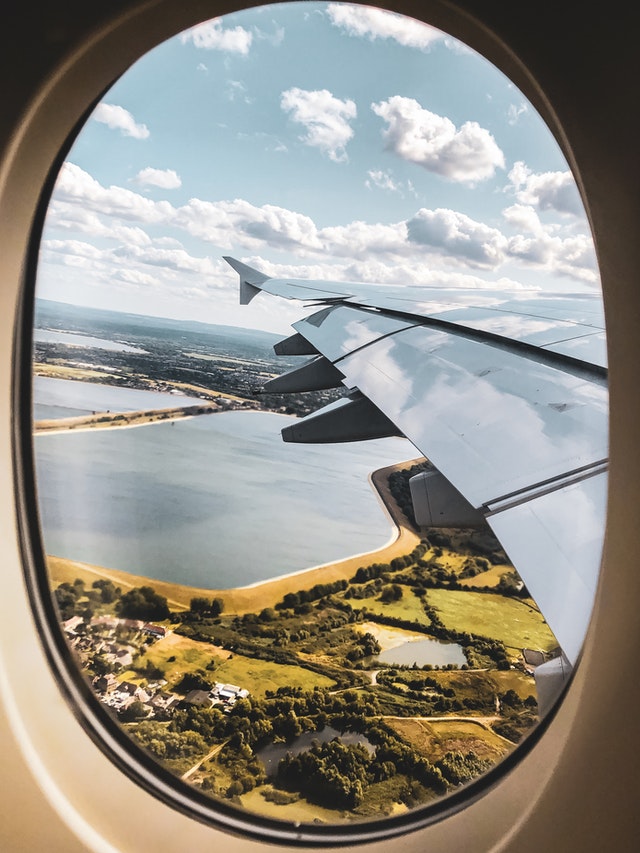
These procedures seek to delay the extension of flaps and slats until a late stage of the approach. Flaps and Slats are additional surfaces on the wing that can be extended prior to landing to provide additional lift to allow a safe landing, but they can also generate additional noise which can be heard on the ground, you can see a picture of the flaps extended on the wing opposite.
Gatwick Airport is also exploring with its airlines opportunities to also delay the extension of the aircraft’s landing gear until it is on the final approach.
The A320 arrival ‘whine’
More than half of the flights at Gatwick are conducted by the Airbus A320 series of aircraft. This family of airliners have a design characteristic which can cause increased airframe noise in the aircraft’s approach phase of flight. Airbus has developed a Fuel Over Pressure Protector (FOPP) modification to eliminate these effects.
The modification enables a significant reduction in the high-pitched whine compared with unmodified aircraft, and this is having a real impact in reducing noise disturbance. And as a result, the modification of these airliners, using the Airbus designed kit, was identified as a priority by Gatwick Airport.
Gatwick’s objective is that all A320 series aircraft using Gatwick are fitted with the Airbus noise reduction kit and inline with that objective Gatwick announced that with effect from 1st January 2018, higher noise charges will apply to any A320 family aircraft that does not have the FOPP modification. The charge has been set at a level which will provide a strong financial incentive to each airline to ensure that their aircraft fleet operating out of Gatwick has the FOPP modification.
Several home-based airlines have confirmed that they are accelerating their modification programmes as a result of this new charging structure.
To date, over 300 aircraft have been modified, delivering a large noise reduction not only to those who live around Gatwick Airport, but to all of those located across Europe where all of these A320 family aircraft operate.